
Retail shops and local storefronts
Point-of-sale systems, guest networks and staff equipment should be reliable without introducing unnecessary complexity.
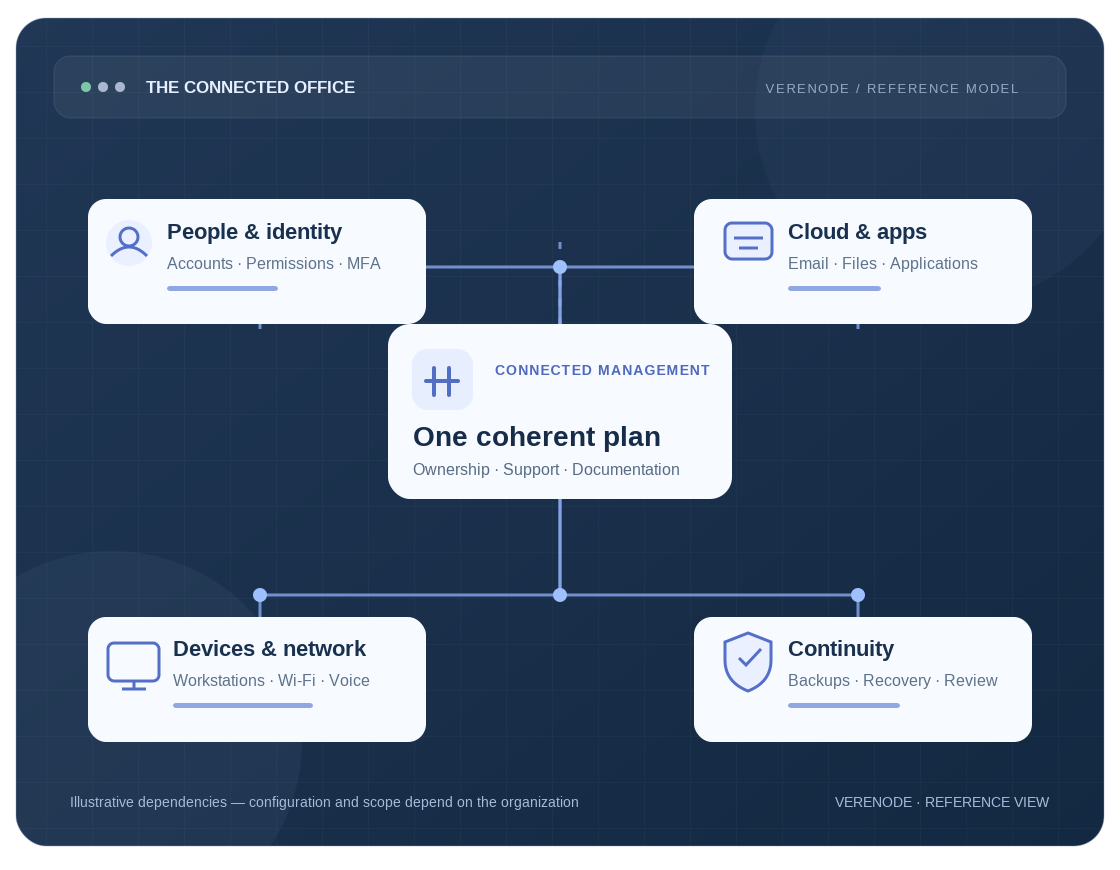
Start with the work, then choose the technology.
We coordinate with existing POS vendors; payment-system compliance and hardware certification remain with the responsible providers.
A useful technology plan identifies critical applications, who uses them, where information is stored and what a disruption would mean. Those details should shape support procedures, network boundaries, access controls and project timing.
Separate staff, POS and visitor Wi-Fi
Coordinate compatible checkout and peripheral connectivity
Organize device inventory and replacement spares
Document internet, provider and recovery contacts
Relevant service areas.
These are possible starting points, not an assumption that every business needs all of them. The right scope depends on your existing environment and requirements.
Networks & Infrastructure
Design, deploy, stabilize, and document the infrastructure connecting your people, equipment, and everyday applications.
Service detailsManaged IT & Support
Keep computers, accounts, applications, and employee technology organized with practical support and a clear plan for what comes next.
Service detailsSecurity, Cameras & Continuity
Protect access, plan for common disruptions, and manage business technology with security as an everyday practice.
Service detailsWhat to clarify in a discovery meeting.
People and workflows. Who relies on the systems each day? Which tasks cannot reasonably stop? Are staff working only in one location, remotely or across several sites?
Ownership and access. Which accounts, devices, cloud services and vendors are business-controlled? Can an authorized person recover them when the usual administrator is unavailable?
Reliability and recovery. What happens during an internet failure, device loss, vendor outage or accidental deletion? Which recovery expectations are truly required?
Priorities and budget. What needs attention first, and which changes should be staged? A clear plan separates urgent remediation from maintenance and longer-term projects.
Tell us what you are
trying to improve.
Start with the situation, not a solution. We can discuss the systems involved, what matters to your team and the right next step.