Listen & map
Understand the request in business terms. Identify users, applications, devices, vendors, permissions and the impact of a failure.

A clear process turns a technology request into a project people can understand, approve, test and maintain. Here is how we approach that responsibility.
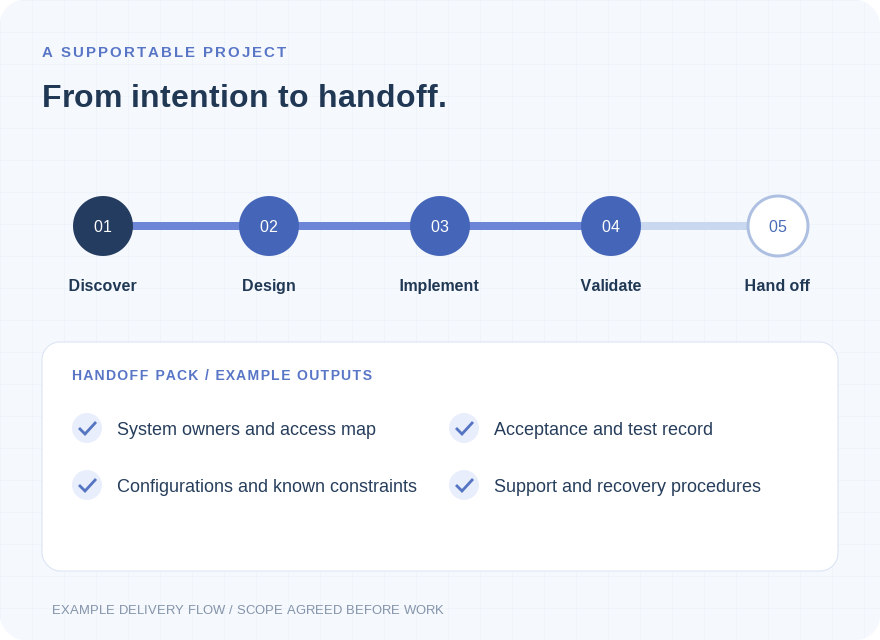
A technology project can be technically correct and still cause trouble. It might lack business ownership, overlook one important dependency or leave staff unable to support the result. This is why useful discovery and validation matter even for projects that appear straightforward.
We organize work around the business problem and the people affected. The process stays proportionate: a ten-device refresh needs different paperwork and change controls from an identity migration or a multi-site network project.
Not every engagement includes every deliverable below. The written scope should identify what is included, which decisions remain with the business and what depends on third-party systems or separate specialists.
The output of each stage should make the next one more predictable.
Understand the request in business terms. Identify users, applications, devices, vendors, permissions and the impact of a failure.
Distinguish immediate risks and interruptions from optional improvements. Identify dependencies, unknowns, licenses and potential specialist involvement.
Present a practical approach with scope, responsibilities, approvals, timing, exclusions, costs and verification criteria.
Stage changes appropriately, preserve recovery options, coordinate third parties and communicate expected disruption.
Check user journeys, access, devices, network behavior, backups or integrations relevant to the scope. Record unresolved exceptions openly.
Hand over business-owned administration, asset details, procedures, and maintenance or support responsibilities. Review improvement opportunities when appropriate.
The temptation is to buy another access point. A better first step is to learn where connectivity fails, whether the internet service or switches contribute, what devices are affected and how existing wireless coverage is configured.
Discovery might show a configuration issue, interference, overloaded coverage, a power problem or an ISP fault. The right intervention depends on evidence. The handoff should document the final topology, access credentials ownership, management method and known limitations.
That same discipline applies to email migrations, workstations, backups and custom applications: understand, change, verify, document.
Explore the network playbook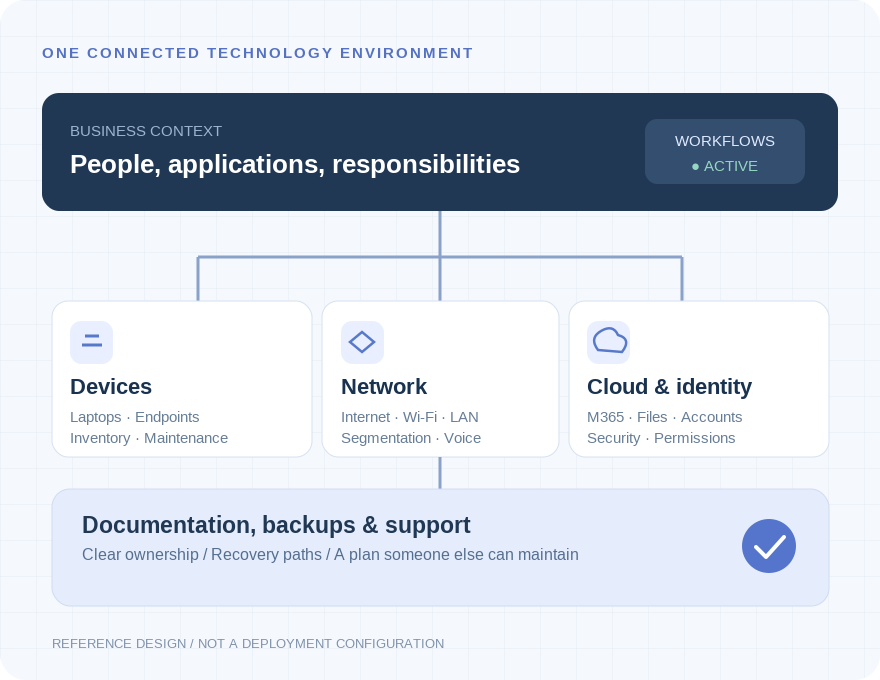
These questions are useful when comparing any technology provider, including Verenode.
Will our company control the domain, cloud tenant, management accounts and vendor relationships after the project?
Are third-party fees, licensing, cabling, travel, data recovery and specialized work clearly separated?
What functions, users and business activities will be checked before the project is accepted?
Will we receive relevant documentation, known issues, next actions and a usable support route?
Start with the situation, not a solution. We can discuss the systems involved, what matters to your team and the right next step.